
Cognitive Assessments
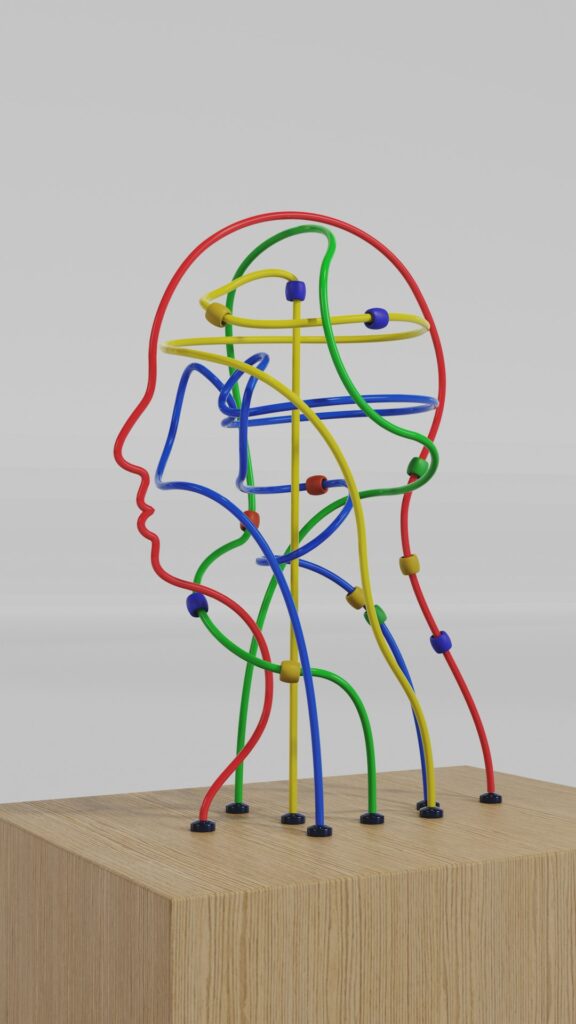
You are doing everything right, and still your focus slips, your memory feels slower, and no one can tell you why.
What a Cognitive Assessment Is
A cognitive assessment is a structured set of standardised, validated tests. It measures memory, attention, processing speed, executive function (planning, reasoning, and shifting between tasks), language, and visual and spatial skills. Your results are compared with norms for people of a similar age and education level. So the question is not only whether a score is high or low, but whether it is what we would expect for someone of your age and education.
Trouble with focus or memory is not simply laziness or a lack of effort. A cognitive assessment helps show where the gap between ability and output sits. It is not a brain scan, and on its own it does not tell you why the gap is there.
What Happens at the Assessment
- A clinical interview covering your concerns, your history, and how they affect daily life
- A battery of standardised tests, typically 1.5 to 3 hours long, in a single appointment or across two sessions
- A mix of formats: spoken tasks, paper-based tasks, and working with objects or simple computer-based tools
- Some timed tasks, because speed of thinking is one of the things measured
At your first appointment the clinician discusses your concerns and decides which areas are most relevant to test. The session is designed to be as comfortable as possible, and the clinician explains each task before it begins. The tests are non-invasive. The effort is mental, so a long session can be tiring.
What the Report Gives You
You receive a detailed written report with:
- Your performance in each area tested
- How that compares with expected levels for your age and education
- A diagnostic impression, where the findings and your history support one
- Practical recommendations for your situation
What It Can and Cannot Tell You
What it can show
- Which areas are strong and which are weaker
- Whether your results fall below what is expected for your age and education
- A baseline to compare against later
- A profile your clinician can use to help plan support
What it cannot show on its own
- The cause. Low scores can come from poor sleep, low mood, anxiety, pain, medication, or a medical or neurological condition
- A diagnosis. That comes from the full picture, not one test
- Your whole daily life. Language, schooling, and culture also shape scores, so results are read in context
A short screening test, such as a memory questionnaire, is a first look and not a diagnosis. A full assessment goes further, but it still describes how you performed. It does not guarantee an answer.
Who It May Help
- Adults or children with concerns about attention, memory, or learning that have not been formally assessed
- People being investigated for ADHD, dementia, or acquired brain injury
- People whose cognitive concerns standard clinical assessment has not explained
- People who need a written record of cognitive difficulties for education, work, or medico-legal purposes. Whether a school, employer, or court accepts it is their decision
- Professionals seeking a baseline cognitive profile for monitoring
Where It Fits
A cognitive assessment is one part of a wider assessment, not a replacement for one. Your clinician reads the results alongside your history and any other findings.
For memory, concentration, and learning concerns, our assessment guide pairs cognitive testing with QEEG brain mapping. QEEG shows patterns of brain activity. Cognitive testing shows how you perform on tasks. They answer different questions. Treatment, where it is needed, is planned from the full assessment. See Psychiatry and Psychology.
Research by Dr Aziz Al-Namani
Published work related to this topic. See all publications →
- Disorder of self-neglect in brain injured population in Oman: incidence, neuropsychology and psychopharmacology. Brain Injury, 2008, 22 (Supplement 1), 24-25.
Frequently Asked Questions
Is a cognitive assessment the same as an IQ test?
They overlap but are not the same. An IQ test mainly gives an estimate of general intellectual ability. A cognitive assessment is wider: it looks closely at separate areas, such as memory, attention, and processing speed, and shows the pattern across them, including strengths as well as difficulties.
How long does it take?
Typically 1.5 to 3 hours, in a single appointment or across two sessions. The clinician decides which areas to test after hearing your concerns.
Do I need to prepare?
There is nothing to study, and it is not a pass or fail exam. Come rested, bring your glasses or hearing aids if you use them, and tell the clinician about any medication and how you have been sleeping.
Will it tell me if I have dementia or ADHD?
For dementia, it is one of the tools used when it is unclear what is behind memory problems. For ADHD, the diagnosis rests mainly on your history and symptoms, and a result in the expected range does not rule it out. The test does not diagnose either condition on its own. A diagnosis comes from your history, the interview, the test results, and sometimes other tests.
Can my child have one?
The assessment is open to adults and children. The clinician decides which tests suit your child after hearing your concerns. When a child works hard and still struggles to learn, that is not laziness, and an assessment can help show where the difficulty sits.
What if my results are normal but I still struggle?
That can happen. Results in the expected range do not mean nothing is wrong. Low mood, anxiety, stress, poor sleep, and pain can affect daily life even when scores look typical, and standard testing conditions do not always capture everyday distraction. Your clinician considers the results together with what you describe.
Can I have the assessment again later?
A baseline is useful because it can be compared with a later one. Repeat testing is usually spaced out, because familiarity with the tasks can raise scores.
Sources: NIMH (nimh.nih.gov), NHS (nhs.uk), Mayo Clinic (mayoclinic.org)
Is this right for you?
Our clinical team will assess whether this treatment fits your situation. Ask us at your initial consultation.
Book an AssessmentConditions We Help With
Concerns this service commonly supports. Your clinician confirms the right plan for you.
Take the first step.
Our clinical team in Muscat is ready to help. Book a confidential assessment — no referral needed.